I. Lewis said
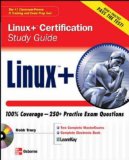
Very good book but poor technical editing. Just reading through the first few chapters I found many contradictions and errors in questions. On the other hand the material is presented well and helps me learn.
P. Coleman said
I have been Windows free and using Linux exclusively for the past 2+ years. I bash shell script and program and have set up a number of networked and non-networked Linux systems. In short, I know my way around a handful of Linux distros from the command line and in the GUI.
I just finished taking the CompTIA Linux+ certification test today. I used Tracy's book as a reference to brush up on subjects that I do not visit on a regular basis. The book does touch on some areas well enough, but I found that there are more topics that the author does not address at all or that are discussed minimally. Some of the lacking topics were found in the CompTIA test.
In fact, I cannot recommend the book as a decent study guide regardless of a person's Linux exposure or background. The book itself has a number of contradictions within it and the self study quizzes must have missed the editor's desk; The a few of the "official answers" are not correct in about 6 chapters.
In short, I estimated some 40 - 45% of the test questions were either never addressed in the "study guide" or were downplayed by the author who chose instead to discuss other "valuable testing information and techniques". In one case, a subject that the reader is lead to believe will account for 20% of the test (installation, partitioning..) never showed up at all. Instead the test comprised of other questions that were never addressed in the book.
The differences are drastic enough that I am recommending a co-worker who is using the book for his test in the coming month to simply throw it away. We will look for better materials elsewhere.
Daniel J. Sheffner said
I studied like crazy for the Linux+ exam using this book and let me tell you this book isn't ideal for the test. I have been a linux admin for about 5 yrs and without that hands on knowledge I would have not passed the test. The book actually does a good job teaching you various areas of the linux env. So my suggestion is read it for a job interview/Don't read for the test.
Michael Li said
I passed the certification exam a few weeks ago. The book was my main tool, it would have been impossible with out it. I installed 4 different server services several times: FTP, Web, Firewall and DNS directly from command line.For my practices I used Ubuntu Server 8.04 but that was a mistake, I should have used Fedora or Suse since both, author and Comptia, seem to prefer mature distributions. Do not make my mistake using Ubuntu. We all love it in desktop environments but it is not as well known as a server, go directly to Fedora , Suse or Debian.
Remember: this certification aims to administrators not final users, if you are a Linux guy with no experience in server services, command line or Unix/Linux architecture, you will have to make a good effort. This is the ideal book if you want a place to start. You will go from boot process to intrusion detection. Perfect and amazing. I would do it again.
N. Rossino said
I gave this book four stars, but that rating definitely needs to be explained. If I were to rate the test on how well it prepares you for the Linux+ exam, I'd have to give it a 3 (not bad not great). There is a lot simply not covered in this book, and a few topics that aren't covered deeply enough. That being said, I read about 7 books relating to Linux/Unix over the past year (not all pertaining to this exam), and none of them covered EVERYTHING in the Linux+ exam to a satisfactory degree. In fact, even if I were to pick any two books, I doubt I'd find a combination that covered everything in the exam objectives to the fullest extent.
So why did I give this book 4 stars? It covers an important niche and does it well - it teaches the reader Linux from scratch, and lays a proper foundation so that they can actually understand what is actually happening inside the operating system. This is probably the best book on the market for those who are very new to Linux, but want to pursue the certification anyway. The first half of the book is a very basic introduction to the OS, and moves at the proper pace for a true beginner. If you are not a novice though, large portions of the book may be unbearably slow to you. That being said, this is a horrible book for "brushing up".
As you might guess, while this is a very good instructional book, it severely lacks detail and information in some of the more complex areas. The configuration of services was pretty weak. It really felt like the parts that needed the most attention were the most neglected. Really, nothing more than a brief overview was given for Samba, NIS, CUPS, BIND,LPR, Xinet.d, Inet.d, etc. It really isn't sufficient to truly understand the topics fully.
Completely missing was a comprehensive list of log files and how to audit them. This can fall under the security objectives, and can potentially add up to a lot of questions in the exam question pool. It really needed to be covered better.
So what other reading and material is out there? The only other book in the Linux+ department that I read was the Sybex book by Smith. The book was overall, very similar, but seemed to go a little more detail into some areas and spent a little less time on the basic stuff. I also read Smith's LPIC book (also a Sybex book), but sadly this was 95% the exact same content as the Sybex Linux+ book. Overall these two books (which are essentially the same) were probably better for test preparation if you meet the Linux+ objectives suggested experience of 6-12 months. If you have no experience, I'd definitely start with the book currently being reviewed.
While I didn't read any more Linux+ books, I did happen to find a much better alternative than the books previously mentioned. The LPIC Exam Cram book from Ross Brunson is hands down the best preparation for this test (assuming you do have some experience with Linux). Let's face it, the test is almost all command line knowledge, and doesn't test your conceptual understanding much at all. The exam cram format fit perfectly, and Brunson's writing was both concise and extremely lucid. In a very simple pattern, the book went over all the commands, what they do and how to manipulate them. It did a great job as not reading like a bunch of rehashed man pages, and did an amazing job of clarifying everything in very little page space. The scope of the book also came the closest to covering the entire objectives, although it was lacking in a few parts here and there. IF YOU ARE GOING TO BUY ONE BOOK, GO WITH THE BRUNSON LPIC EXAM CRAM.
Other honorable mentions included "the Linux Administration Handbook", and the Testout Linux+ computer based training CD's. The Linux Administration handbook is a great reference to have and takes a more practical approach (not exam oriented). The Testout cbt courses do not actually cover a lot, but they are the best instructional video's I've seen (CBT nuggets was way too short and not in depth). The Testout material is more geared to learning linux than passing the test though.
ABOUT THE TEST:
Without violating the NDA, I'll try to do my best to describe the experience and what you need to do to pass. I scored an 855 out of 900, but I have close to 2 years hands on experience and have done extensive reading on the topic (part of the reason is I just wanted to become more Linux proficient, most of it wasn't for the exam or even within the objectives).
First let me say, the test is very straight forward (not necessarily easy though). It maps to the objectives perfectly, and almost all of the questions I received were clearly written (unlike the Server+ test). One gripe I had with the test is that if you DO NOT use the BASH shell and you use the Csh or equivalent, you will be picking the wrong answers. I think in the objectives it states that you are to know the BASH shell, and the questions are written with this assumption. However, if you use a csh and they ask a question that has a valid response for the csh, you may be instinctively picking the wrong answer (even though it may be right for the csh).
My biggest gripe with the test though was that the suggested experience is severely misleading. I don't think 6 to 12 months experience is nearly enough to know what is needed for this test. I think if we were to say 6-12 months, we'd have to assume that you are actively using the OS 8 hours a day for a whole 6 months. From my experience however, Linux is often used in a server environment where its configuration is changed infrequently. I know a lot of Apache, MySql administrators who don't really do much until there is a problem or they need to make changes (which may not be often).
A lot of people who are bonafide administrators with a good amount of experience who don't intensively study for this test may be disappointed with the results. The material covered doesn't go far enough to test real proficiency in areas that some administrators work in (if you're an Apache, DNS or NIS expert, you really won't get extra points). The test is also likely to go beyond what some are normally used to. It's a very "old school" type test. If you look at the objectives, there is no material about getting wireless networking to work, running Wine, or what GUI tool does what. The test is complete command line system's administration, which goes deeper than many of us newcomers are used to (let's face it, we can use GUI tools for a lot of stuff nowadays). Do not underestimate it.
That being said, here are some helpful tips to pass:
Learn the following things, in order of importance
1) Know the location and purpose of every major config file.
2) Know all the major command-line tools and what they do (you may need to reference a few books to get full coverage here).
3) Know the more common switches for command line operations (don't beat yourself up about knowing the more obscure ones)
4) Know the major settings in the listed config files. You won't have to build a config file from scratch (remember, its multiple choice), but you should know what does what inside that config file.
If you are just learning Linux, and/or do not have any other IT experience or certifications... take a step back. Knowing your hardware and networking is a must and covers about 15% of the objectives. This is one of the more difficult tests to "fudge" your way through. Its simply too much to memorize, so you are going to have to actually spend time doing some of the things in the XK0-002 objectives. As mentioned, Testout is a great video instructional tool if you don't learn well from reading.
Use more than one source!!!! Reading a single book will not allow you to pass the test like with some other certifications. In fact, reading alone won't do it. You are probably going to have to set up VMware and do quite a bit of practicing on an actual command line. (I recommend using fedora core or SuSe).
Remember to actually READ the objectives (free download from comptia.org). You won't know what you haven't covered and how important each topic is without the objectives. Knowing what you need to know and how heavily weighted the area is makes a BIG difference.
Invest in practice test questions, or testing simulators. This is where you will find out what you really know and what you don't know. The questions at the end of the chapter's in your books help, but they are very poor preparation. After a practice test or so I realized I simply didn't understand the X windows configuration (I thought I did before hand though). Testing your knowledge is the best way to find out what you are weak in, and you don't want to find this out when you take the actual exam.
Good luck, I hope this helps!

Comments